

Graphite Re-impregnation Services for Heat Exchangers and Process Equipment
Over time, graphite process equipment can become porous as the resin initially used to seal the graphite structure gradually degrades under demanding operating conditions.
When the graphite itself remains mechanically sound, re-impregnation offers an effective alternative to component replacement. By restoring the sealing properties of the graphite, Mersen helps customers extend equipment life, improve reliability, and avoid unnecessary capital expenditures.
-
What Is Graphite Re-impregnation?
Graphite re-impregnation is a restoration process that renews the resin contained within graphite components after years of chemical and thermal exposure.
In many cases, the graphite structure remains intact, but the resin originally filling the graphite pores has deteriorated, allowing process fluids to penetrate the material and create porosity.
Re-impregnation restores the barrier properties of graphite and can return components to near-original performance.
- Re-impregnation can restore a graphite component to essentially like-new condition when the graphite remains structurally sound but the resin has degraded.

Tim Smith
Service Manager
-
When Is Re-impregnation Required?
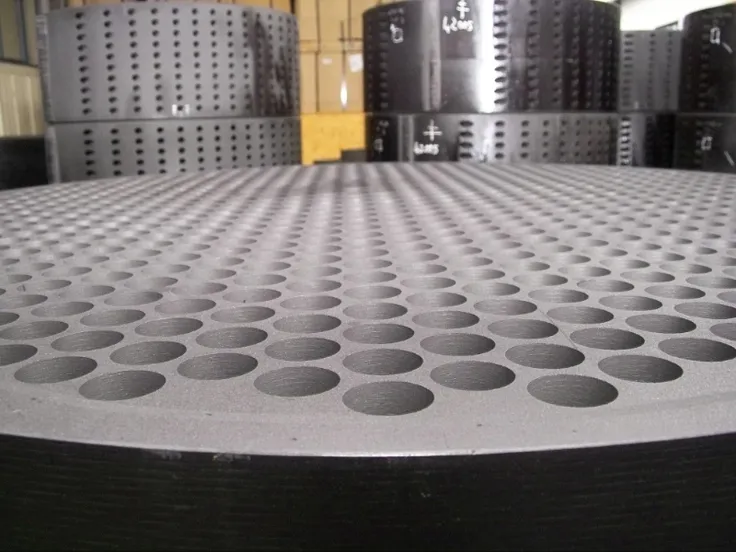
Re-impregnation may be recommended when testing reveals increased porosity in graphite components while their mechanical integrity remains acceptable.
Typical candidates include:
- Graphite tube sheets
- Graphite heads
- Graphite blocks
- Graphite process equipment components
Graphite tubes themselves are generally not re-impregnated and are normally replaced when required.
The service team performs inspections and testing to determine whether re-impregnation is the most appropriate repair strategy.
-
The Graphite Re-impregnation Process
Restoring a graphite component requires more than simply adding resin.
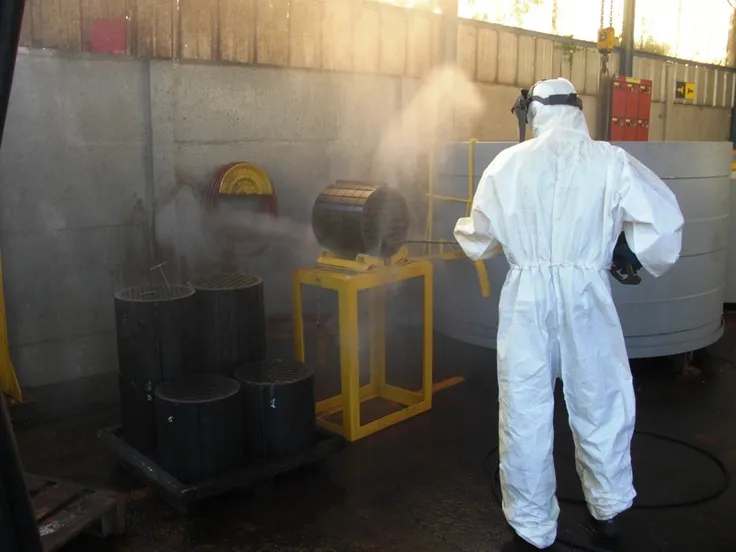
Before new resin is introduced, the component must undergo a controlled preparation process to remove contaminants absorbed within the graphite structure.
The typical sequence includes:
- Cleaning the graphite component.
- Neutralizing the graphite to restore proper pH conditions.
- Baking the component to remove moisture and residual contaminants.
- Vacuum and pressure re-impregnation with resin.
- Final inspection and quality verification.
This process ensures the new resin fully penetrates the graphite pore network.
-
Benefits of Graphite Re-impregnation
Re-impregnation offers significant advantages compared with replacing large graphite components.
Benefits include:
- Extended equipment service life
- Reduced maintenance costs
- Improved equipment reliability
- Lower downtime compared with equipment replacement
- Preservation of valuable graphite components
For many customers, re-impregnation provides a cost-effective way to maximize the return on existing equipment investments.
-
Mersen's Graphite Re-impregnation Capabilities
Mersen performs graphite re-impregnation through dedicated service facilities equipped to handle graphite process equipment repairs and refurbishment at Louisville (Kentucky), Gonzalez (Louisiana), and Salem (Virginia) service centers. All the three service centers provide support for customers across North America and international markets
The process is available in multiple service locations, providing flexibility and responsive support for customers worldwide.
- All three of our service facilities offer graphite re-impregnation capabilities.
Tim Smith
Service Manager
-
Why Choose Mersen for Graphite Re-impregnation?
As both a graphite and equipment manufacturer and service provider, Mersen combines deep graphite expertise with specialized repair capabilities.
Our teams can:
- Inspect graphite equipment
- Diagnose porosity issues
- Determine repair feasibility
- Perform professional re-impregnation services
- Restore critical process equipment
- Help extend operating life while reducing total ownership costs.
-
Evaluate your equipment
Contact our graphite repair specialists
Evaluate your equipment and determine whether re-impregnation is the right solution for your application.
-
Graphite Re-impregnation
-
What is graphite re-impregnation?
Graphite re-impregnation is a restoration process that renews the resin within a graphite component after years of operation in corrosive and high-temperature environments. When the graphite structure remains mechanically sound but its resin has degraded, re-impregnation can restore the component's sealing properties and extend its service life. That process can restore a graphite component to a condition that is essentially equivalent to new when the graphite itself remains structurally intact.
-
How do I know if a graphite tube sheet requires re-impregnation?
A graphite tube sheet may require re-impregnation when increased porosity allows process fluids to penetrate the material. In the field, customers may observe performance issues or suspect porosity, but the final diagnosis is typically confirmed through inspection and testing at a Mersen service facility. The service team evaluates whether the graphite remains structurally sound and whether re-impregnation is a viable alternative to replacement.
-
Can graphite heat exchanger tubes be re-impregnated?
No. Re-impregnation is generally applied to graphite tube sheets, heads, and blocks. The process does not apply to the tubes themselves. If graphite tubes are damaged or leaking, they are normally replaced through a retubbing operation rather than re-impregnated.
-
What are the benefits of graphite re-impregnation?
Graphite re-impregnation offers several advantages:
- Extends the life of valuable graphite components
- Restores equipment performance and reliability
- Reduces maintenance and replacement costs
- Minimizes downtime compared with manufacturing new components
- Preserves existing assets and supports sustainable maintenance practices
When the graphite structure remains sound, re-impregnation can be a highly cost-effective alternative to replacing large graphite components.
-
Is re-impregnation less expensive than replacing a graphite component?
In many cases, yes. Re-impregnation allows customers to retain existing graphite components that remain structurally sound while restoring their sealing performance. Because replacement of tube sheets, heads, or blocks often involves higher material costs and longer lead times, re-impregnation can provide a more economical solution when the component is suitable for refurbishment. This determination is made after inspection and testing by Mersen specialists.
-
Which graphite components can be restored through re-impregnation?
Re-impregnation is commonly used on:
- Graphite tube sheets
- Graphite headers
- Graphite blocks
- Other graphite components used in corrosive process equipment
The process is appropriate when the graphite remains mechanically sound but the original phenolic resin has deteriorated, leading to porosity. Graphite tubes themselves are not candidates for re-impregnation.
-
How does the graphite re-impregnation process work?
The process involves several controlled steps:
- Cleaning the graphite component.
- Neutralizing the graphite to remove chemical residues.
- Baking the component to eliminate moisture and contaminants.
- Applying new resin through the re-impregnation process.
- Performing inspections and quality checks before returning the component to service.
This preparation is critical because contaminants trapped in the graphite pores must be removed before new resin can be successfully introduced.
-
Does Mersen offer graphite re-impregnation services worldwide?
Mersen offers graphite re-impregnation services through multiple dedicated service facilities. According to Tim Smith, re-impregnation capabilities are available at the Louisville (Kentucky), Gonzalez (Louisiana), and Salem (Virginia) service centers, providing support for customers across North America and international markets.
-
When should I choose re-impregnation instead of replacement?
Re-impregnation is generally the preferred option when inspection confirms that the graphite component remains structurally sound and only the resin has degraded. If cracks, severe mechanical damage, or loss of structural integrity are present, replacement may be the more appropriate solution. A detailed evaluation by Mersen experts helps determine the best repair strategy.
-


